KnowledgeSpot

Our mission is to introduce people with upcoming latest knowledge about Solar Energy as well discoveries in the world.

Showing posts with label News & Discoveries. Show all posts

Monday, 22 July 2019

Big News---Chandrayaan-2 Successfully LAUNCHED:-India would be the fourth country to be the soft landing on the Moon surface


India has successfully launched its second moon mission a week after the scheduled blast due to technical  issue.

Chandrayaan-2 was launched at 14:43 local time (09:13 GMT) from Sriharikota Space Center.

The three-phase GSLV Mk-III rocket successfully entered all three stages and immediately after launch, Chandrayaan-2 entered the lower orbit of the earth.

Chandrayaan-2 was originally launched a week after being set to leave the earth. Chandrayaan-2 was to be launched on 15th July, but a technical glitch forced the launch of Indian Space Research Organization (ISRO).
India expects that $ 145 mission will land for the first time on the Moon's South Pole.

The space shuttle has entered Earth's orbit, where it will last for 23 days before a series of maneuvers, which will take it to the orbit of the moon.

India would be the fourth country to be the soft landing on the Moon surface. Only the former Soviet Union, America and China have been able to do the same.

For the first time in India's space history, two women - Muthiah Vanitha, Project Director and Mission Director Ritu Karnidal are being led.

Chandrayaan-2 mission is a huge leap in India's space dreams. The mission is also a forerunner of the ambitious Gaganjan project, which aims to keep three Indians in space by 2022.


Monday, 15 July 2019

Big News:- Chandrayaan2 launch has been stopped, revised launch date will be announced later.


Sriharikota: Moon Rocket 2, India's most ambitious space mission, launched. The powerful GSLV Mark III rocket was set to go from
Sriharikota in Andhra Pradesh at 2:51 pm with a rover which will land on the moon in about two months time. However, after being caught for the first time 56 minutes before the blast-off, due to technical issues Chandrayaan launch was stopped.President Ram Nath Kovind was present at the space harbor for launch.

The countdown was stopped from the planned liftoff at 2:51 am 56 minutes and 24 seconds ago. Sources said before the separation, the crystal was in the final stage of cryogenic phase or rocket. ISRO had announced an hour before the launch that the liquid hydrogen refueling was complete.

ISRO tweeted around 3am in the morning-A technical blockage was seen in the launch vehicle system 1 hour before launch. As a precaution the #Chandrayaan 2 launch has been stopped. 

Prior to the launch, ISRO chief K Sivan told that the launch window has to meet several technical criteria and so can be a week or a month for the new date.

Ravi Gupta, director of the Public Interfaces of the East Defense Research and Development Organization, said that it was the right decision to stop the launch of Chandrayaan 2. We could not take any chance in such a big mission.

Meet the Chandrayaan 2:-

The 3.8-tonne Chandran 2 spacecraft  which included an orbiter, lander and rover, was to land on the 640-ton GSLV Mark III (nickname "Bahubali"), which was India's longest rocket, which is a 15-story building Was the highest rocket.

Once it is launched, Chandrayaan 2 has to be separated from the rocket and before moving towards the Moon many times the earth has to rotate - 3.84 lakh km journey. The moon is rotated for about one year for circus
The success of Moon Mission will take India into an elite league. 

It will be the fourth country to soften a space shuttle on the moon surface after the US, Russia and China. Israel tried at the beginning of this year but failed.

All the instruments included in Chandrayaan Mission have been designed and manufactured in India. 

The Chandrayaan 2 tag has an estimated $ 124 million less than half of Hollywood blockbuster Avengers Endgame ($ 356 million). The Indian Space Agency's budget is 20 times lower than NASA, which is its US counterpart.

Friday, 12 July 2019

Malaysian government-owned Tenaga setting up a renewable energy platform in India


Tanaz Nasil, owner of the Malaysian government, is searching for an alternative to setting up a renewable energy platform in India.The company supplies electricity to 31.7 million people in Malaysia.

It is said that the government-owned power utility is going to acquire renewable energy assets in India.

India is running the world's largest green energy program, which plans to achieve 175GW capacity by 2022.

Due to competitive solar bids and the wind power sector of India that has been infected with the feed-in tariff regime, which ensures a fixed price for wind power producers, for the tariff-based competitive auction, funding at the lowest cost Has become important.

In April,  Malaysian government-another owned company Petroleum National Sheep or Petronas acquired one of India's largest rooftop solar power producers, Emplus Energy Solutions Pvt. Ltd.. Ltd.  Oil and gas company paid oil worth Rs 2,700 crore for the deal.

India is at fourth and fifth position globally in established capabilities for wind and solar energy respectively. With the market capitalization of around $ 18 billion, the interest of Malaysia's biggest power utility comes at a time when India's emerging green economy requires additional investment of $ 80 billion by 2022, which is $ 2023-30 Three times to 250 billion Economic Survey 2019.

India is running the world's largest renewable energy program with its plan of 175 GW (GW) and up to 500 GW, under its climate commitments, by 2030. 80GW has established renewable energy capacity in the country.

In India, TNB is partnering with GMR Group in Energy Business and GMR Energy Limited, holds 30% shares in it, believes that India's energy sector has long-term opportunities for future growth.

Thursday, 27 June 2019

NASA opening moon rock samples sealed during Apollo 15 as a 3.5 billion year old basalt rock


For the first time in decades, NASA is going to open some ancient
specimens and geologists have put a crack on them with the technology of the 21st century.

A pressure nitrogen-filled test case inside the lunar laboratory in Houston at NASA Johnson Space Center on Monday, June 17, 2019, collected
during Apollo 15 as a 3.5 billion year old basalt rock, similar to rocks made around Hawaii. Has been displayed in For the first time in decades, NASA is going to open some ancient specimens and geologists have put a crack on them with the technology of the 21st century. 

After decades of flip-floping between Moon and Mars as the next big
astronaut destination, NASA's goal is to keep astronauts on the moon
surface again by 2024 towards the White House.

Some clay and rock clocks were filled with vacuum on the Moon - and never came into contact with Earth's atmosphere - or after the splash, gaseous helium was frozen or frozen and then left untouched.

Lab's employees are now trying to find out how good it is to remove samples from their tubes and other containers without spoiling or spoiling any thing. They are practicing with imitation tools and luncheon plays dirt.

About 70 percent of the original halo is in ancient sample vault, which has two combinations and takes two people to unlock. About 14 percent of the white sands in New Mexico are safe. The rest are used for research or demonstration.

Armstrong was the primary rock collector and photographer, Aldrin
collected two main specimens under the surface during a 2 1/2-hour moonwalk. All five later Apollo moon landed long lasting. In the last three - Apollo 15, 16 and 17 - there were rovers who kept the sample collection and coverage area up a lot.

Fifty years later, we are still learning new things ...incredible," Charity Chrysler of the Lab said, a clear acrylic marble embedded with Apollo 11 moon rock chips in its gloved hand

Monday, 24 June 2019

Did You Know that ? One animal is capable of generating an average half horsepower.


The Gandhian and Marxist patrons of China have advocated a ban on the slaughter of cattle working for different reasons.


While the 84-year-old Acharya's tireless efforts to ban cow slaughter caused a spiritual change, the late Chairman Mao has given similar arguments for the protection of animals working purely for their potential power resources.

Economics of animal power is carefully studied because the energy equations in this country have far-reaching effects. Mao's brief campaign enabled the Chinese to build an impressive stock of more than 50 million buffaloes as cattle.

Today there are about 8 million (male) buffaloes in India, which total 240 million cattle population. The total value of these animals and related infrastructure can be more than Rs. 20,000 crores, which is equivalent to investment in the organized industrial area of
​​India.

Each task animal is capable of generating an average half horsepower. Animal Husbandry In India 40 million H.P. - equivalent to about 30,000
MW of electric power. The total current installed capacity for electrical power is 26,000 MW.

In order to produce and provide 30,000 MW of energy at millions of points of application, the conservative estimates will have an investment of 30,000 crores. On the contrary, the total investment in animals working today is Rs 10,000 crore

Economic aspects of reproduction, maintenance, health, work, death and slaughter of cows, bulls, buffaloes and other animals for India's developing economy are paramount.

The working animals contribute two-thirds of energy inputs on the fields, 20 percent comes from human effort, and 10 percent from other sources: hydroelectricity and fossil fuel 500,000 villages of India and hundreds of small urban townships are efficient Delivery is a dream more than immediate reality.

Small farmers, which hold 50 percent of all farmland, are on land less than 2 hectares. That's why animal power is the only viable, efficient source of energy, not a tractor. 

To generate 1 kW of electrical energy at the point of use, an investment of about Rs 10,000 will be required. An unprecedented investment of Rs. 30,000 crore will be for changing the all animal energy to the  electric power.


Sunday, 23 June 2019

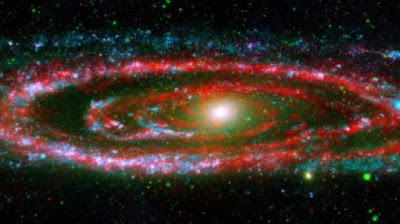
M 32 is not latest mobile phone look like our galaxy sibling which is lost years ago


Scientists have now found evidence of the existence of the lost sinking galaxy.


The largest galaxy of the local group with the Milky Way is a halo around Andromeda. Scientists have now speculated that Halo is the remains
of a Milky Way galaxy, which was eaten by Andromeda 2 billion years ago.

On July 23, a group of scientists announced a great find. It is called M32P. The name looks like the new model of the mobile phone. But it is not M32P is the lost sibling of our Milky Way galaxy. 

Some experts have tried to explain the latest find with the analogy of a child eating their breakfast on the dining table while away from their mother. Here the child is Andromeda, also called M31, and breakfast was
M32. When the mother (scientist) returns after a while, she does not find a small child on the dining table, but the breadcrumbs are spread all over the floor, a large area of ​​size of the dining table.

The University of Michigan said in a statement,"Scientists have long known that there is a relic of small cannibalic galaxies in the nearly invisible large halo surrounding galaxies." There was a possibility of the destruction of hundreds of his younger colleagues from a galaxy like Andromeda. "

The M32 galaxy was at least 20 times larger than any galaxy, which merged with the Milky Way during its lifetime. In its original shape, M32 has been the third largest galaxy in the local group after Andromeda and Milky Way.

Eric Bell, one of the scientists called M32 "a strange" Bell says, "While this is a compact example of an old, elliptical galaxy, there are actually many young stars in it, this is one of the most compact galaxies in the universe. There is no other galaxy like this."

Saturday, 22 June 2019

Big News:- Nasa's latest Mars craft nears landing for detect planetary heat and seismic rumblings


NASA's first spacecraft, designed to detect the deep interior of another world, moved on Mars on a huge, barren field on Monday, where the devices to detect the heat and seismic distractions of planets. After sailing 301 million miles (548 million km) on a six-month journey through deep space, Robot Lander Insight was due to touching nearly 8 am GMT on the dusty, rocky surface of the red planet.

If everything is in accordance with the plan, then InSight will hinder through the top of the diluted Martian atmosphere at 12,000 miles per hour (19,310 kilometers per hour). 

Insight will land 77 miles from the skies of Mars Mars in 6 minutes in 8 minutes, and by that time it will travel 5 miles per hour (8 kilometers) .

The mission control team at NASA's Jet Propulsion Laboratory (JPL) near Los Angeles is expected to receive real-time confirmation of arrival of craft from data retrieved by a pair of micro satellites launched with Insight
Also expect that a picture of a new environment of testing on the flat, smooth Martian field near the equator of the planet can be obtained, which is called Allycema Plenitis.

This site is about 373 miles (600 km) from car-shaped Mars Rover Curiosity 2012 landing spot, which was sent by NASA to the last spacecraft.

Insight will spend 24 months - about a Martian year - using seismic surveillance and underground temperature readings to unlock secrets about the formation and expansion of Mars, other rocky planets of Earth's original and internal solar system.


Scientists have expected to see a dozen to 100 marsquakes during the mission, which builds data to help reduce the depth, density and structure of the core of the planet, the rocky mantle around it, and the outermost layer, crust. A radio transmitter will return the signals tracking the microscopic rotational plow in Mars to reveal the shape of the core of the planet and possibly it is molten or not.

NASA says it will take two to three months to deploy and operate the main equipment.


Friday, 21 June 2019

Isro satellite launch: GSAT-29 Eye over Indian Ocean, internet connectivity in J&K, NE


GSAT-29 is taking Geo, which is expected to help agencies involved in strategic surveillance.


Indian Space Research Organization (ISRO) launched the high-throughput communication satellite GSAT-29 from Satish Dhawan Space Center in Sriharikota, Andhra Pradesh. The practice was called the GSLV MkIII-D2 mission.

GSAT-29 is India's 33rd built communications satellite. This is a multi-beam and multiband communications satellite. Once turned on, GSAT-29 will provide Internet connectivity in Jammu and Kashmir and in some remote areas of the North-East. 

GSAT-29 is taking an on-board unique high-resolution camera capable of tracking "enemy ships" in the Indian Ocean. This high-resolution on-board camera is being referred to as Geo-Eye. It is expected to assist the agencies involved in strategic surveillance.

China, along with recent strategic assets in Sri Lanka, Maldives and Djibouti, has been aggressive in increasing its presence and influence in the Indian Ocean.

The SAT-29 will be placed in its final geostationary orbit (GEO) using the on-board propulsion system, and it may take a few days to reach its orbital slot after it is separated from the launcher.

6GSLV Mk-III is the fifth generation launch vehicle developed by ISRO. The GSLV Mk-III vehicle is designed for space up to 4,000 kg in GTO. This is equivalent to 10 tonne Lo meaning orbit (LEO) or GSLV Mk II's capacity.

The GSAT-29 launch is the 67th mission from Sriharikota Island. This is the 23rd launch from the second launch pad. Tuesday flight of GSLV Mk-III is the ISRO's fifth launch mission in 2018.

0GSLV MkIII is a three-phase heavy lift launch vehicle developed by ISRO. Two solid straps on the vehicle as a first stage,  a  liquid  propellant core as the second stage and a cryogenic form in the third phase.


Wednesday, 19 June 2019

Kilogram's Definition changed:-The new way to measure the kilogram


                                         fig:-kibble balance

This image shows the equilibrium balance - a new way to measure kilograms, because it is included in other units in the SI measurement system, which are assessed for physical constants.

New way of measurement:- The kilogram was defined by a metal cylinder in a French vault. Now, this major unit of mass is defined by Planck constants, using a basic shape in physics.

Planck constant is related to the energy of the photon in its frequency. This incredibly small number is measured by a very sensitive kibble balance , which uses a powerful magnetic field to do its work.

Researchers will now be able to weight things properly without the French flight to compare with the cylinders identified as Le  Grand  K or the International prototype kilogram. By comparing Le Grand K with copies distributed globally, it was clear that despite their efforts to protect precious cylinders, their mass has changed. 

According to Hanson, the kilogram was redefined to make an accurate, irreversible standard for its value. More than a century of cleaning and exposure to the air caused the original French prototype - which is known as the international prototype of the kilogram or "Le Grand'K" to lose about 50 micro-grams.


Tuesday, 18 June 2019

Big News:- Facebook has planned to launch a new cryptocurrency called Libra


                                   http://flyurlo.com/EeuWyU

Facebook is planning to launch cryptocurrence next year -  supported by MasterCard, Visa and PayPal - which will allow people to transfer money with low cost. 
Money is known as Libra, which Facebook says is "no special role" in governing and managing the reserve equally with a group of large companies.
It includes 28 firms, including Spotify and Uber, each to invest a minimum of 8 million pounds to become a founding member of the Libel Association. 

Facebook will conduct its own digital wallet for people,which is known as Calibra Wallet, which is available as Whatsapp, Facebook Messenger and standalone app, will spend in Libra.

Social network said that users will not be able to pay money to each other at the beginning. After all, it intends to open the Calibra Wallet to additional services, so that people can pay bills, scan a code or buy goods by accessing public transport.

Facebook wrote in a statement:- Calibra's account information will not be shared with Facebook "To keep people safe, to follow the law. , And to provide basic functionality to those using Calibra.

The social network is expecting that their cryptocurrence will be less volatile than other digital currencies. Bitcoin is the largest cryptocarse ever, which has experienced extreme volatility in the last two years, with prices ranging from £ 2000 to about 15,000 pounds for single bitcoin.


Sunday, 16 June 2019

Oldest human footprints discovered in Canada: Study // likely of two adults and a child


Around 13,000 footprints - the probability of two adults and one child - was found on an island in western Canada.

According to a study published Wednesday, about 13,000 years ago human footprints were found on an island off the coast of western Canada, which is the oldest in North America.

According to the authors of the study published in Parrose One magazine, footprints are due to walking between two adults and a child barefoot, who are walking barefoot on a beach on Calvert Island in the northeast of Vancouver Island today.

According to chief author Duncan McLaren, professor of human sciences total traces of 29 feet were found during the excavation work from 2014 to 2016.

Studies show that humans were present on the Pacific coast of British Columbia about 13,000 years ago, and this area was well snow free before the end of the last ice age on this continent about 11,700 years ago.

They came from Asia The search further strengthens the hypothesis that the first humans reaching North America had migrated from Asia through an ice-free land corridor, which is now British Columbia.

But it is not easy for the researchers to support the hypothesis, because Canada's area is very rugged, which is surrounded by dense jungle and can only be reached by boat.

Researchers focused their digging on a tidal area on Calvert Island, where water levels were two to three meters (yards) lower at the end of the ice age than today.


Saturday, 15 June 2019

World's fifth largest diamond discovered in Lesotho and sold in 40 million US dollars


Mani's diamond can be considered as the fifth largest stone, which can be worth 40 million US dollars, which has been discovered in Lesotho according to Minor Gem Diamonds.

According to Jame Diamonds Chief Executive Officer Clifford Elphick said, "In 2006, Gem Diamonds acquired Letseng in 2006, the mine has produced the world's most notable diamonds, including 603 Carat Lesotho Promise." "However, this extraordinary top-quality diamond is the biggest mining ever".

This is a historic discovery." Liberty Capital's mining analyst Ben Dewis told investors in a research note that the diamond could be worth $ 40 million (33 million Euros).
The shares of Gem Diamonds in London were up 14 percent from the open market price of 0.92 pounds per piece.

The company explored the D-colored stone in Letseng mine in southern African country and described it as "extraordinary quality" of the 910 carat.

Ben Davis:- told investors in a research note that diamond could be worth 40 million US dollars (33 million Euros)


Sold:---The largest ever-gem-quality diamonds ever mined have been sold for $ 40 million.

After the sale, CEO of Gem Diamonds, Clifford Elphic said in a statement that the company "was happy", saying that its purchase highlighted the "Standard quality of Lesotho legend" and high standard of production of Lettsang mine diamonds .

Gem Diamonds has recovered many diamonds in recent months, the company had said last week that it has detected six diamonds larger than 100 carats since the beginning of the year.


Friday, 14 June 2019

Big news on India’s next Moon mission! Chandrayaan-2 mission launch date revealed


Chairman of Indian Space Research Organization (ISRO) Siwan announced on Wednesday that India's second mission will be launched on Chandrayaan-2 on  July 15. 
Landing on the Moon near the South Pole. Landing will be approx  on September 6 or 7. Indian Space Agency is ready for its most complex mission.

The launch will be on the GSLV MK-III vehicle at 2.51 am from the space station of Sriharikota.
 ISRO had earlier launched a launch window for the mission from July 9 to July 16. He said that the orbiter will have eight payloads, lander three and rover two. 

Sivan said that the mission cost of Chandrayaan-2 in relation to satellite was Rs 603 crores. The cost of GSLV MK III is Rs. 375 crores.

According to ISRO, the orbiter will rotate around the moon, with the scientific payload. Lander will deploy soft land and rover on the Moon at a predetermined location.

ISRO said that after launching the GSLV MK-III in an earth-bound orbit, the integrated module will reach the orbit of the Moon using the orbiter propulsion module and later, the lander will be separated from the orbiter and the soft land at the preceding site, the Moon South Pole Close to.

 Chandrayaan-2 is an advanced version of the last Chandrayaan-1 mission:---Devices were also installed on landers and orbiter to carry out scientific experiments. Chandrayaan-2 is an advanced version of the last Chandrayaan-1 mission, which was launched about 10 years ago.

Chandrayaan-1 had 11 payloads - five in India, three in Europe, two in America and one from Bulgaria - and this mission was credited with discovering water on the moon surface.


Thursday, 13 June 2019

Thankfully tattoo removal is available to help remove these unwanted tattoos.//Australian company makes tattoo removal


Tattoos have become a major part of today's culture, in which many people choose their body ink from a variety of reasons. The problem is, many people wants to remove their  tattoos because they grow and move on through various life stages or simply change their mind.

Earlier its  seemed to be a good idea that it will not be resonated with your thoughts or lifestyle. Thankfully, removing tattoos can help to remove these unwanted tattoos.

Unwanted tattoo are removed with ultra short pulses of amplified light by using medical grade laser. These pulses of light are attracted to the pigment in your tattoo, which later breaks and shatters the ink in your tattoo. These ink particles are then broken into small pieces which are pulled by the immune cells of the body and end up with the useless way of the body. The ink particles are safely and naturally flowing out of your system, so that the ink disappears.

Safe and no Pain:-This process is more safe and less invasive than the old, primitive treatment such as excision or salabrison, which often leaves people with bad marks and increases the duration of excessive pain.

Benefits :-You can finally say goodbye and go ahead with your life when you remove your unwanted tattoo.When you go for an important job interview or promotion, or for special social events, you will not need to cover your tattoo

You can go through this link and fixed your appointment for tattoo removing purpose.

Wednesday, 12 June 2019

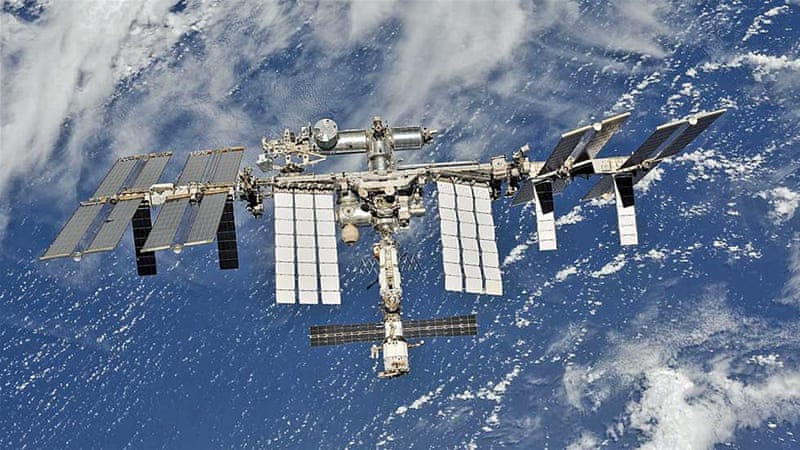
Citizens may be able to go to the the International Space Station each year : The next hot tourist destination


NASA announced on Friday at the Nasdaq Stock Exchange that it is opening up the International Space Station (ISS) for marketing, advertising, off-earth manufacturing and even tourism, for beneficial activities.

Robin Gattens, NASA's Deputy Director, NASA said "We are enabling two commercial flights per year with private astronauts, it depends on the fact that they will be potentially a dozen or so many personal astronauts per year at the International Space Station."

Gattens also added some points , "Private astronauts from other countries can fly through an American institution". This means that the passengers of  ISS do not have to pass the United States passport . They need to book their training, their ride and their 30-day stay through American Space Carriers.
Tourism and other ISS commercial efforts are part of the collective form of just 30-page policy - thanks to the NASA's commercial LEO development plan - which was released on Friday

Sierra Nevada Corp is a commercial interest that is actively testing its multi-mission space utility vehicle, Dream Chaser. This vessel is similar to NASA's retired space shuttle in which it can be sent by rocket to LEO, and  can be landed on the airstrip after returning to Earth. However, it should be a more robust vehicle that is designed to be a temporary orbital science laboratory.

NASA astronaut Steve Lindsay, who is the Vice Chairman of the Space Exploration System with more than 30 years of experience in flight testing, he said, "I think the commercial-use policy is really important how open the market is".

NASA Chief Financial Officer Jeff Davit said that the plan "will enable NASA to focus resources on the moon by 2024 to bring the next man and the first woman". This is not a profit-making venture for NASA, the costs we spend to maintain the station and remaining cost spend to go further into space and go to Mars. "
 Dewitt said that once every six to 12 months the rate card will be re-evaluated. Accordingly the  ticket will be cheaper.

Cost per citizen:-  The current pricing plan is expensive. For sending cargo to ISS, only 3,000 dollars per kilogram will be spent, life support and toilet facilities cost $ 11,250 per person per day. 
The cost of access to food, air, medical kit and onboard gym is $ 22,500 per person per day.